



-
SMILES OF THE FUTURE - ETHICS - EMOTIONS & AESTHETICS
- 18 April 2026
- Dentists 1160 PLN; trainees, students 870 PLN | NO AVAILABLE SPOTS!
- Manggha Museum of Japanese Art and Technology
- Lectures conducted in English with simultaneous interpretation
-
Scientific director: Dr hab. n. med. Maciej Żarow, DDS, PhD, DSc
-
PROGRAM
Saturday 18.04.2026Manggha Museum of Japanese Art and Technology-
08:50 - 09:00
CONGRESS WELCOME
-
 Dr. hab. n med. Maciej Żarow, DDS, PhD, DScAbout the speaker
-
-
09:00 - 10:50
SESSION 1. BEAUTY - CERAMICS - COMPOSITES
-
09:00 - 09:45
What is a Beauty? The Role of Visual Perception in harmonising minimal and non-invasive indirect restorations into the patient faces.
-
 Dr. Luca Lorenzo DallocaAbout the speaker
Aesthetics is the harmonious fusion of beauty and art.
Aesthetics, in dentistry, is a game of balance between teeth, soft tissue, lips, face person and personality. In order to produce aesthetic results that are closer to nature and really attractive, not fake and all alike (e.g. Stereotyped Smile), we need to develop artistic capacities, which everyone can improve by the comprehension of perception’s psychology. Many of us, Dentist and Dental Technician, are very good with their biological and aesthetic results when our work is analyzed just in the oral region. Often when we evaluate how it looks into the patient face the result is far away to be natural and attractive
Objectives: The auditorium should achieve the knowledge to develop artistic capacities.
The goal is to make everyone able to see in the whole, not just to look into details.
Everyone should be able; to understand the psychology of perception, and to transfer these information’s to daily practice, achieving the ability to evaluate the balance of the composition of the front teeth into the patient face.
The attendees should gain the capacity of seeing what is right or wrong with a smile, what is harmonious and what is in tension, in order to better understand patient’s needs and to correct only what is necessary.
-
-
09:45 - 10:30
Predictable Protocols for Direct Restorations of Compromised Posterior Teeth.
-
 Dr. Celine HigtonAbout the speaker
Direct restoration of structurally compromised posterior teeth remains one of the most challenging and technique-sensitive procedures in contemporary restorative dentistry. This lecture outlines a comprehensive, evidence-based workflow designed to improve predictability, durability, and biomimetic integrity in everyday clinical practice. Key topics include accurate diagnosis of structural loss, selection of adhesive strategies, management of deep margins, advanced matrixing and re-walling techniques, and the strategic use of short-fibre composites as dentine replacements. Emphasis will also be placed on creating stable occlusal morphology, controlling polymerization stress, and optimizing light-curing protocols.
Participants will gain a clear, step-by-step understanding of how to approach compromised posterior teeth with confidence and how to execute direct restorations that are not only functional and long-lasting but also minimally invasive and biologically respectful. This lecture provides a practical synthesis of current literature, clinical experience, and biomimetic principles to help clinicians achieve consistent, high-quality outcomes.
-
-
10:30 - 10:50
Coffee break
-
10:50 - 13:05
SESSION 2. PERIO-ORTHO-IMPLANT WORKFLOW VS TOOTH PRESERVATION.
-
10:50 - 11:35
Aligners and Prosthodontics: When Digital Workflow Makes the Difference.
-
 Dr. Andrea BaruffaldiAbout the speaker
The increasing number of adult patients seeking aesthetic and functional rehabilitation has made the integration between orthodontics and prosthodontics a fundamental part of modern dental practice. In this context, digital orthodontic systems based on aligners represent a powerful tool to simplify treatments and improve their predictability.
This lecture focuses on the clinical integration between aligner therapy and prosthodontic rehabilitation, highlighting how a fully digital workflow can optimize space management, tooth positioning and aesthetic planning before prosthetic procedures. Through the use of digital impressions, virtual setups and interdisciplinary treatment planning, aligner therapy can be effectively employed as a pre-prosthetic strategy to reduce invasiveness and enhance final outcomes.
Clinical cases will be presented to illustrate how digital planning with aligners allows clinicians to anticipate prosthetic needs, minimize tooth preparation, improve aesthetic integration and streamline communication between orthodontist and prosthodontist.
The presentation aims to provide practical insights into when and how digital aligner workflows can make a real difference, offering a repeatable and clinically efficient approach for daily practice.
-
-
11:35 - 12:20
The Model of a Perio-Implant-Prostho Dental Practice with Digital Ortho Integration.
-
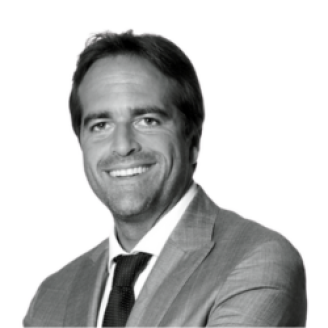 Dr. Andrea Mastrorosa AgniniAbout the speaker
A minimally invasive approach in prosthodontics and periodontology is increasingly shaping contemporary dentistry, influencing the way clinicians diagnose, plan, and execute comprehensive treatments. This lecture presents a modern model of perio–implant–prostho practice in which digital orthodontics plays a key role in enhancing predictability and reducing treatment invasiveness.
Special attention will be given to new aligner systems designed for general dental practice, which allow for optimizing tooth position prior to prosthetic or periodontal procedures. Such orthodontic preparation enables more conservative tooth reduction, improved soft-tissue management, and the achievement of excellent esthetic outcomes. The lecture will also demonstrate a complete digital workflow—from diagnostics and planning, through implant therapy in the esthetic zone, to the final prosthetic rehabilitation—showing how the integration of digital orthodontics, implantology, and prosthodontics creates a coherent and efficient interdisciplinary protocol.
Through clinical examples, participants will see how orthodontic treatment improves implant site conditions, enhances control over prosthetic space management, and supports a minimally invasive philosophy. The aim of the lecture is to present a practical working model that allows clinicians to incorporate digital orthodontics into everyday perio–implant–prostho practice, ultimately increasing predictability, esthetics, and long-term treatment stability.
-
-
12:20 - 13:05
Reviving Roots - Restoring Vitality Through Regeneration Techniques.
-
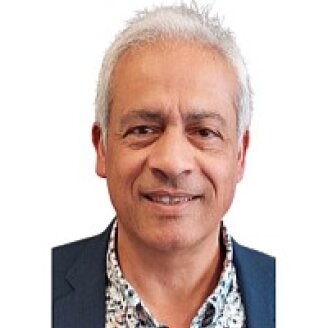 Prof. Imad AboutAbout the speaker
Regeneration techniques using vital pulp treatment has the potential to significantly extend the life of a tooth. However, preserving pulp vitality following exposures or caries remains as a real challenge where healing is highly dependent on the inflammation degree. The balance between inflammation and regeneration is crucial in determining the overall pulp healing capacity within an inextensible environment.
Tricalcium silicates are now considered as the materials of choice for vital pulp therapy due to their chemical, physical and bioactive properties. In addition to the hermetic seal they provide once applied onto the pulp, newly reported data demonstrated that they have an anti-inflammatory potential which creates the adequate conditions for dentin-pulp regeneration and successful clinical outcome. Moreover, the recently demonstrated pulp capacity to kill infiltrating cariogenic bacteria, contributes to our understanding of how these materials push the limits of vital pulp therapy through their successful use in treating dental trauma with pulp exposure and irreversible pulpitis.
This presentation will illustrate the regenerative potential of the dental pulp and its capacity to eliminate cariogenic bacteria. It will highlight the bioactive properties of calcium silicate-based materials, demonstrate their anti-inflammatory effects, and discuss their role in reducing postoperative pain. Advances in pulp biology and material science that are driving a paradigm shift in vital pulp therapy will also be addressed. Finally, a novel patent describing pulp regeneration without tissue volume loss will be presented.
-
-
13:05 - 14:00
Lunch
-
14:00 - 18:40
SESSION 3. ORTHO & AIRWAY
-
14:00 - 14:45
Airway - Optimal Growth - Sleep and Long Term Health through Rational Orthodontics.
-
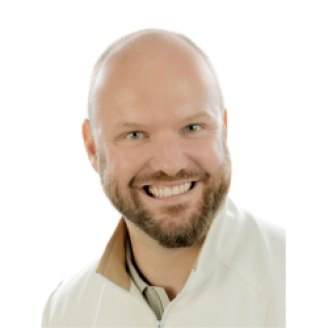 Dr. Steffen DeckerAbout the speaker
The airway is not only vital for survival—it is central to optimal growth, sleep, behaviour, and long-term health. Yet, many children with airway dysfunction are misdiagnosed, overlooked, or only treated once symptoms become entrenched in adulthood. In this session, we explore how functional, structural, and behavioural markers in childhood can serve as early warning signs for the chronic issues we see in adults—ranging from obstructive sleep apnoea, TMJ disorders, and anxiety, to persistent fatigue, poor posture, and compromised cognitive function.
To bridge the gap between early signs and long-term outcomes, we present a structured, clinically practical airway risk bell curve developed to categorise patients from mild to severe dysfunction. This tool offers a visual and functional framework to guide interdisciplinary screening, support early intervention, and communicate airway risk to families and healthcare providers alike.
By reframing airway assessment as a preventative tool rather than a reactive measure, we highlight the opportunity to intervene early—before dysfunctional breathing, poor oral posture, and altered craniofacial development become lifelong burdens. Through case-based discussion and interdisciplinary insights, we reveal how treating the airway in childhood may be the key to breaking the cycle of chronic dysfunction seen in adulthood.
This session invites clinicians across fields to consider: What if many of the adult problems we manage daily could have been prevented if someone had asked, early on—what does the airway have to do with it?
-
-
14:45 - 15:30
Aesthetic optimization in the anterior field, the direct approach.
-
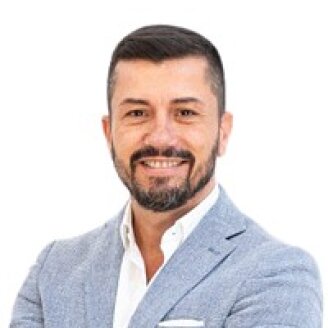 Dr. Daniele GensiniAbout the speaker
The use of direct composite restorations in the anterior area is a valid treatment option and an excellent alternative to improve aesthetics and function while respecting biology, with minimally invasive procedures and significant savings in healthy dental tissue. Modern materials, together with adequate adhesive systems, allow clinicians to perform well-integrated aesthetic results, which mimic the optical, physical and mechanical behavior of natural dentition. During the lecture, the various aspects of the decision-making process and operating procedures will be dealt with, in order to convey to the participants how to make direct composite restorations that are durable and have a high aesthetic-functional impact.
-
-
15:30 - 16:15
Aesthetic treatments for young people: how to manage enamel defects and anatomical anomalies using alternative solutions to traditional prosthetic procedures.
-
 Dr. Federico EmilianiAbout the speaker
The ever-increasing demand for aesthetics by patients requires clinicians to expand the range of their therapeutic solutions through minimally invasive procedures. However, dentists often have doubts about which are the best techniques to achieve success, especially about the treatment of enamel development defects in the aesthetic area. Often, requests for aesthetic solutions come from young patients, between 18 and 30 years old. And not always in this age group is it possible to adopt definitive prosthetic solutions, both to reduce the invasiveness of treatments and for economic reasons. The aim of the lecture is to do a focus about the diagnosis and the treatment possibilities of the most frequent aesthetic requests in the young people. There will be showed several tips and tricks about the most effective procedures: dental bleaching, resin infiltration, micro-abrasion, composite use and finally the injection technique, and the combination of them in a multidisciplinary approach.
-
-
16:15 - 16:35
Coffee break
-
16:35 - 17:20
Minimally Invasive Prosthetic Procedures - PART 1
-
 Dr. Roberto TurriniAbout the speaker
Nowadays the clinicians have at their disposal high-performance materials that can help them facing esthetic and functional treatments using minimally invasive prosthetic techniques. By following the innovative operative protocol called MIPP (Minimally Invasive Prosthetic Procedures) the dentist can face highly compromised clinical situations with a minimally invasive approach. This lecture will consider both prep and no-prep techniques for a perfect result in anterior and posterior areas. The different types of ceramic materials will be analyzed in depth and indications will be given on how to choose the ideal ingot and the correct protocol of cementation, especially in case of thin veneers. Indications and limitations of prep and noprep veneers will be clearly illustrated in order to guide the clinicians both for simple situations and complex rehabilitations, however using always minimally invasive procedures.
-
-
17:20 - 18:10
Minimally Invasive Prosthetic Procedures - PART 2
-
 Dr. Mauro FradeaniAbout the speaker
A successful prosthetic rehabilitation depends on the combination of several strategic factors such as the evaluation of a correct treatment plan, the selection of the most appropriate ceramic material, the application of modern clinical procedures and the use of digital tools.As a result of the alteration of the of the vertical dimension of occlusion (VDO) it is possible to take advantage of the newly created space between the two arches with the effect of minimizing the invasiveness of the treatment when using veneers, full-veneers, buccal-occlusal veneers and table tops, even with very reduced ceramic thickness. Thanks to the MIPP it is possible to re-establish an ideal occlusal relationship and to avoid additional endodontic or surgical steps that were traditionally necessary in order to improve the retention of the restorations. The maintenance of a maximum amount of enamel and the use of the appropriate bonding technique guarantee a remarkable resistance and a long-lasting result of the prosthetic rehabilitation.
-
-
18:10 - 18:40
Discussion
-